


The journey feels like a distant memory as the doors of the yurts open on the morning of our fifth day in Mongolia. Our tour group, made up of steppenstrolch staff and friends, arrived safely yesterday after escaping the vigorous snow storm and now finds itself in the midst of the breathtaking landscape of Gobi B National Park in southwestern Mongolia. A snow-capped, dark-blue mountain range stretches along the entire horizon. The sun shines brightly on the snowfield dotted with bushes, which seems to stretch out in every direction before us, all the way to the horizon and the foot of the mountains.
We have reached our destination for this leg of the journey, as this is where the International Takhi Group (ITG) is based, here in the Great Gobi B Biosphere Reserve. For decades, this non-governmental organization has been dedicated to protecting the national park and, above all, to the reintroduction and conservation of Przewalski’s horses. This region is under special protection to safeguard the habitat of both animals and humans from environmental destruction, such as that caused by mining. In addition to the core zone, to which only a few people have access, there are a second and third zone designed to facilitate the sustainable coexistence of animals and humans and economic production in harmony with natural resources. This is precisely why we are drawn to this region, as we have been in contact with ITG’s German and Swiss partners since 2024 to source camel wool from this remote region for our wool production.
At breakfast, Togi, the ranger who met us yesterday amid the snowstorm, welcomes us at the research station, which serves as the national park’s headquarters. Our group receives an introduction to the history of the Takhi Group and the background behind the reintroduction of Przewalski’s horses. By the 1980s, the wild horse population had been nearly wiped out. In collaboration with European zoos, five Takhi horses were introduced to the national park in 1992, where they were monitored and protected. Today, the herd of Mongolian wild horses has grown to 300, while rangers continue to observe their behavior, release new animals, and protect them from poaching.
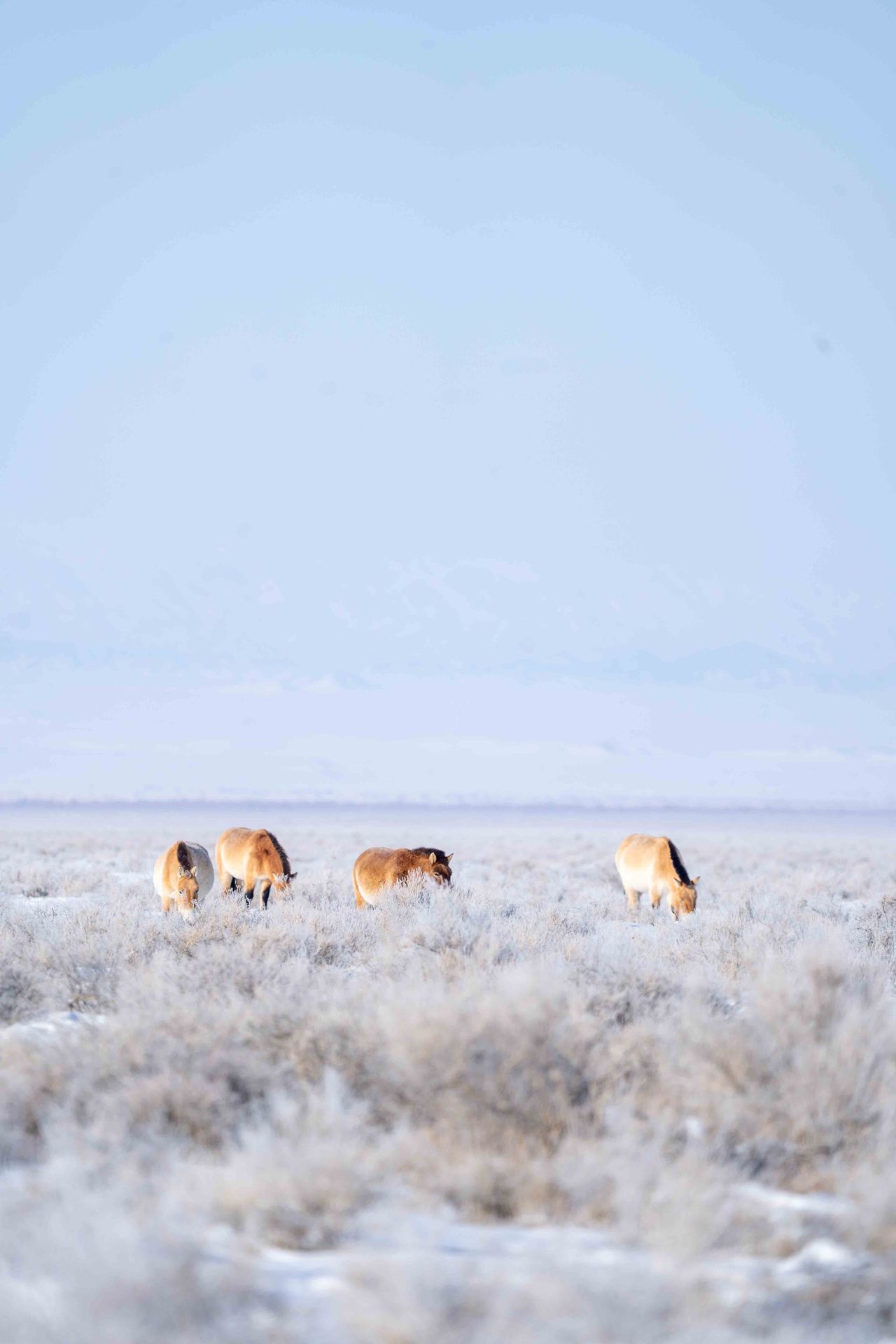
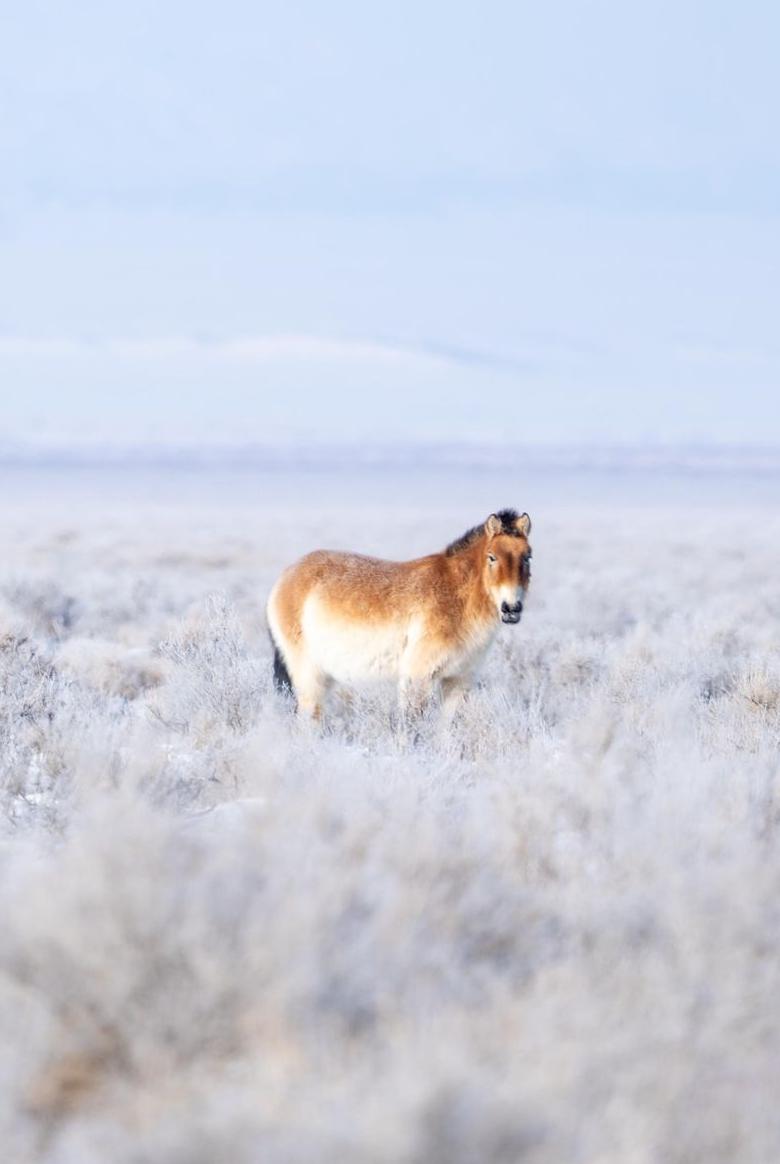
We saddle up again and, instead of wild horses, climb into the two car that have already carried us 2,000 km across Mongolia. While Lotta and I set off with Jerome to visit a nearby nomadic family, the rest of our tour group goes in search of wild horses in the wild. Nomadic families are permitted to let their animals graze and set up yurts in the outer zones of the national park. The family we’re visiting lives 30 kilometers from the research center and isn’t getting any sleep right now. That’s because the first weeks of March usually mark the time when goats and sheep give birth to their babies. With the freezing temperatures, it’s always a race against time. Pregnant goats or sheep can go into labor at any moment, and with a herd of over 300 animals, no newborn can be lost or forgotten. The young animals are usually licked clean by their mothers after birth and fed milk. However, they are often too weak to keep up with the herd on their own and return quickly enough to the shelter of the yurt by evening. It also sometimes happens that baby goats are not immediately accepted by their mothers and fed milk.
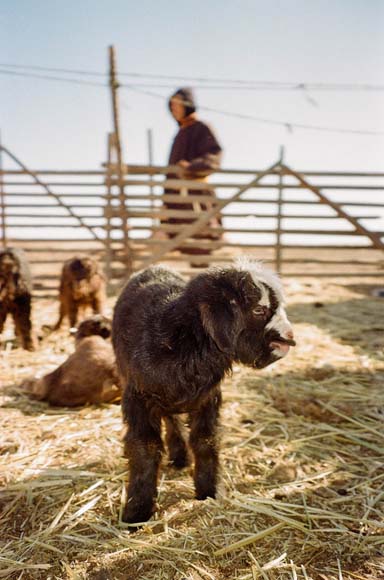
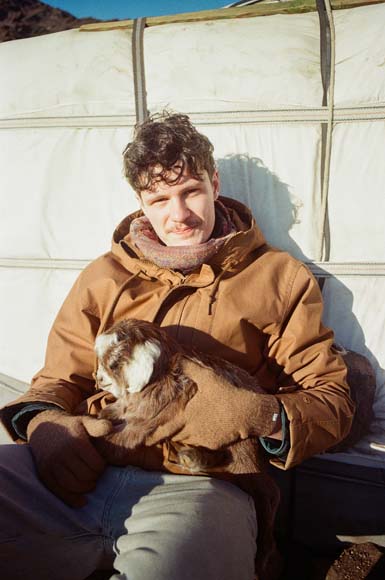
That is why a family member must always keep a watchful eye on the herd and gather up the newborns as soon as they are born. We watch as the older son of the nomadic family appears on the horizon around noon on a motorcycle, a sack slung over his shoulder, and returns to the family’s yurts. The herd had wandered out of the shelter of the small hill where the yurts were pitched that morning to graze and seek out the nearest watering hole. The son now returns from the herd as well, and upon arriving at the family yurt, he pulls three tiny newborn baby goats out of his sack. The young animals cry out shrillly and barely manage to stay upright, wobbly and trembling above the sandy ground. Inside the yurt, they are warmed up a bit before joining the other baby goats outside in a stone-paved area to wait for their mothers. The family’s toddlers run around among the yurts, baby goats, and motorcycles. There is a commotion of children and the bleating of goats that is hard to put into words.
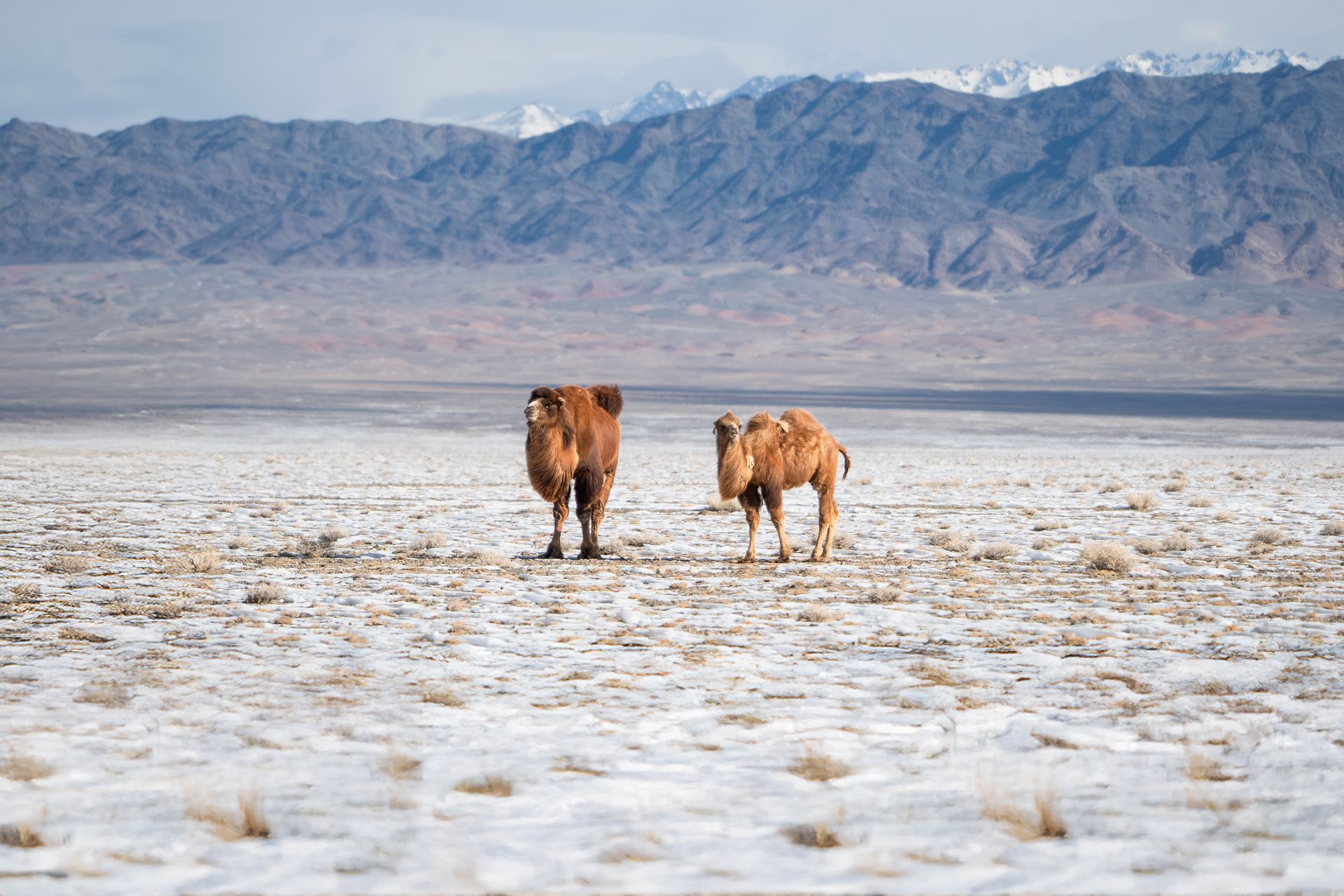
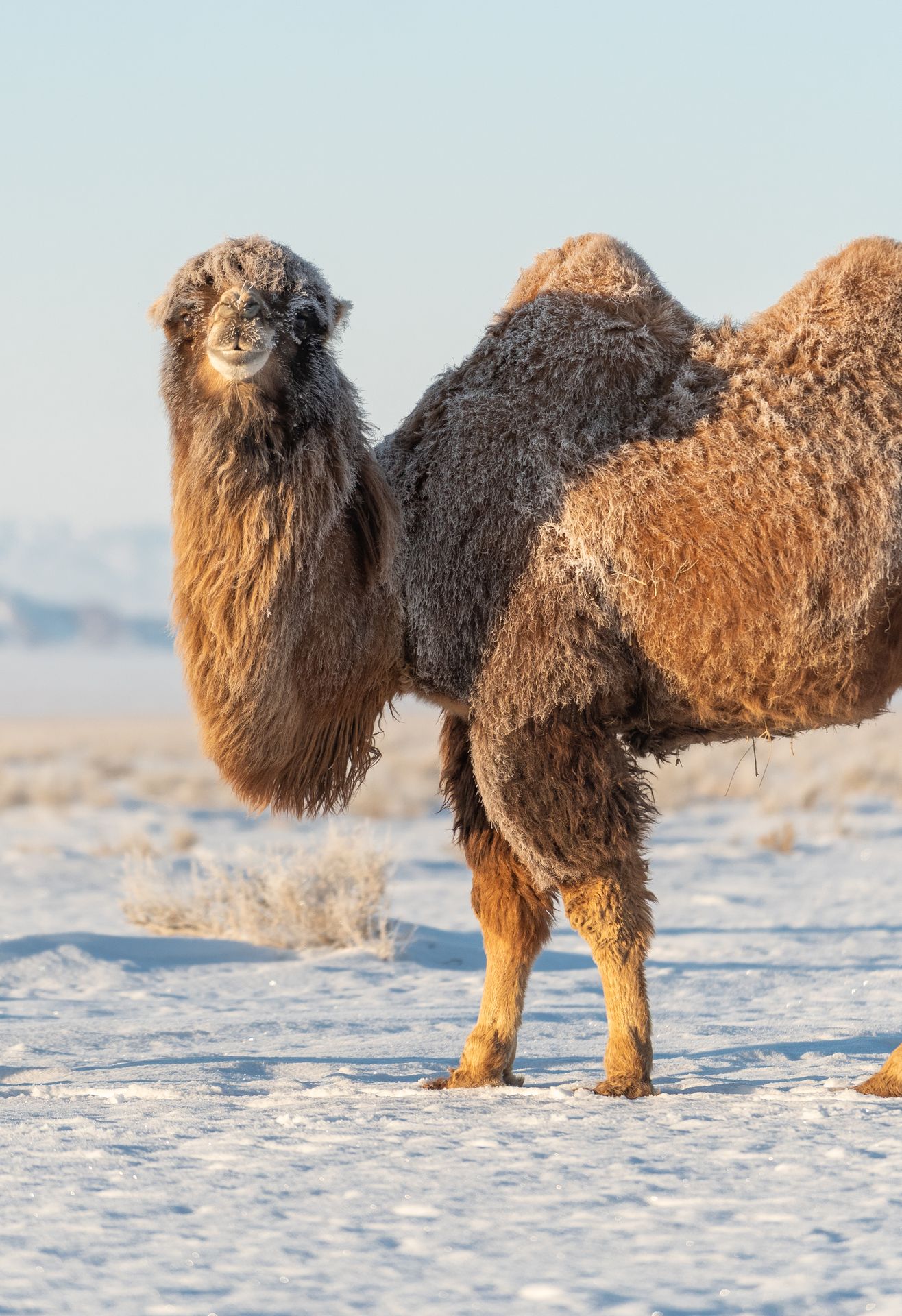
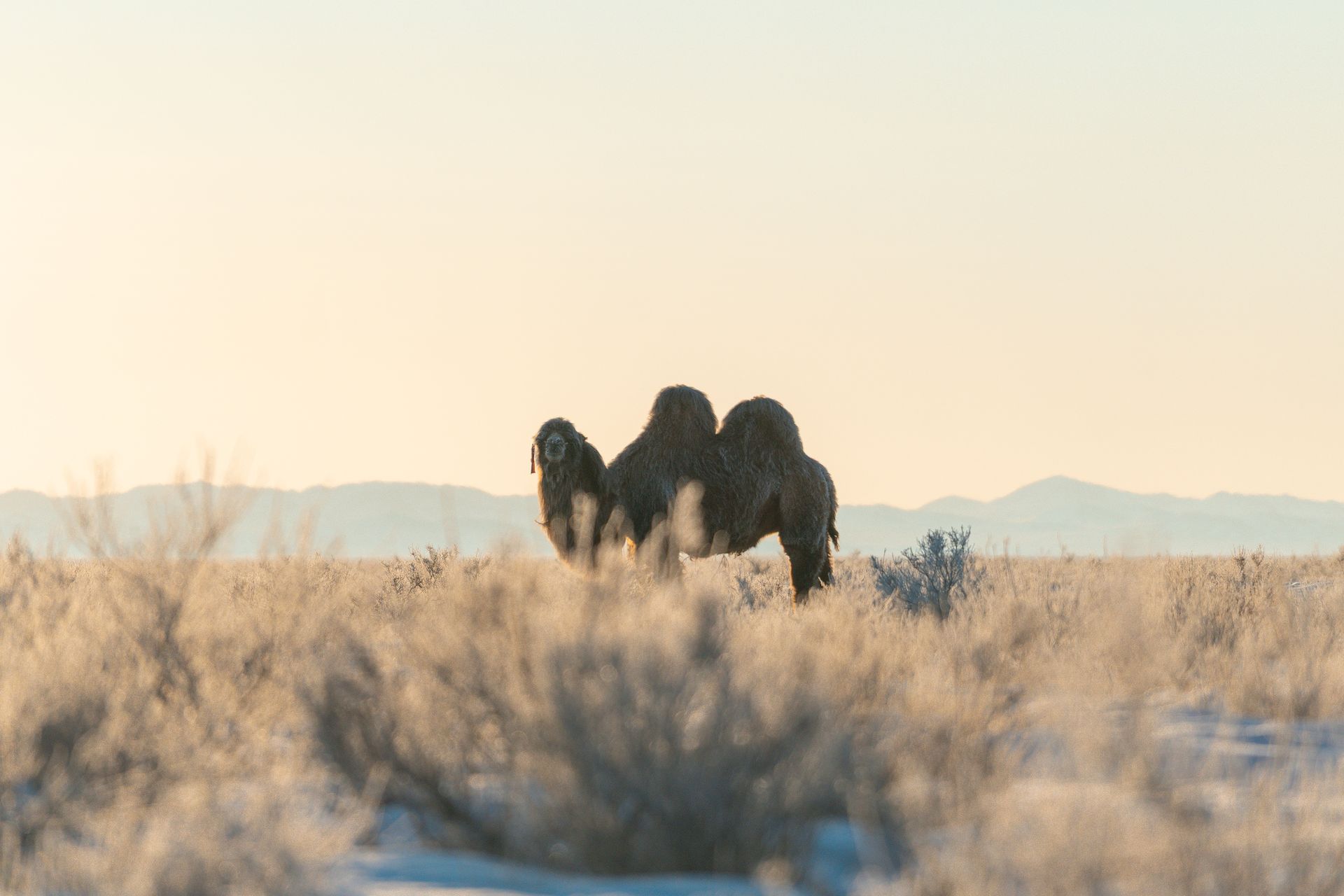
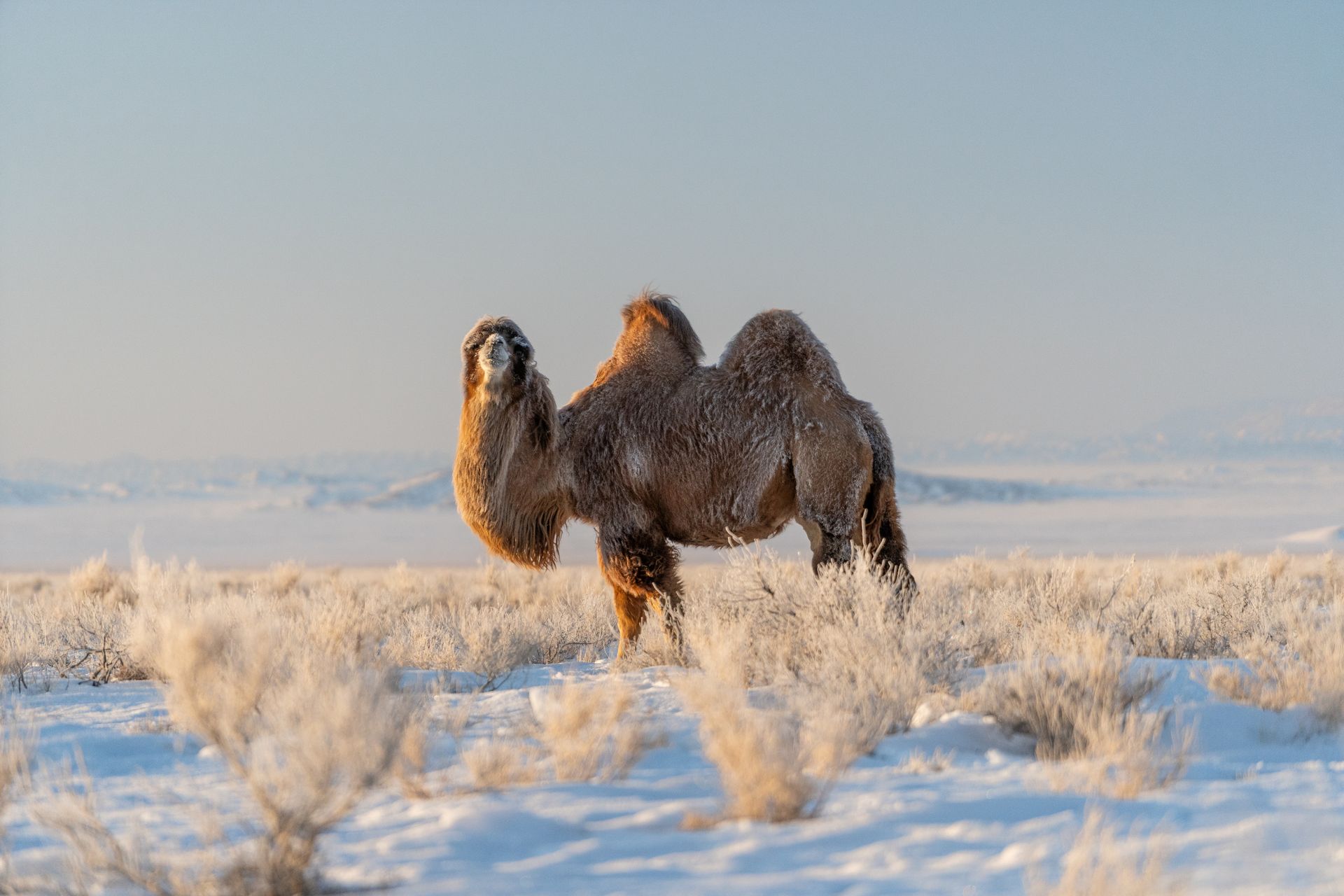
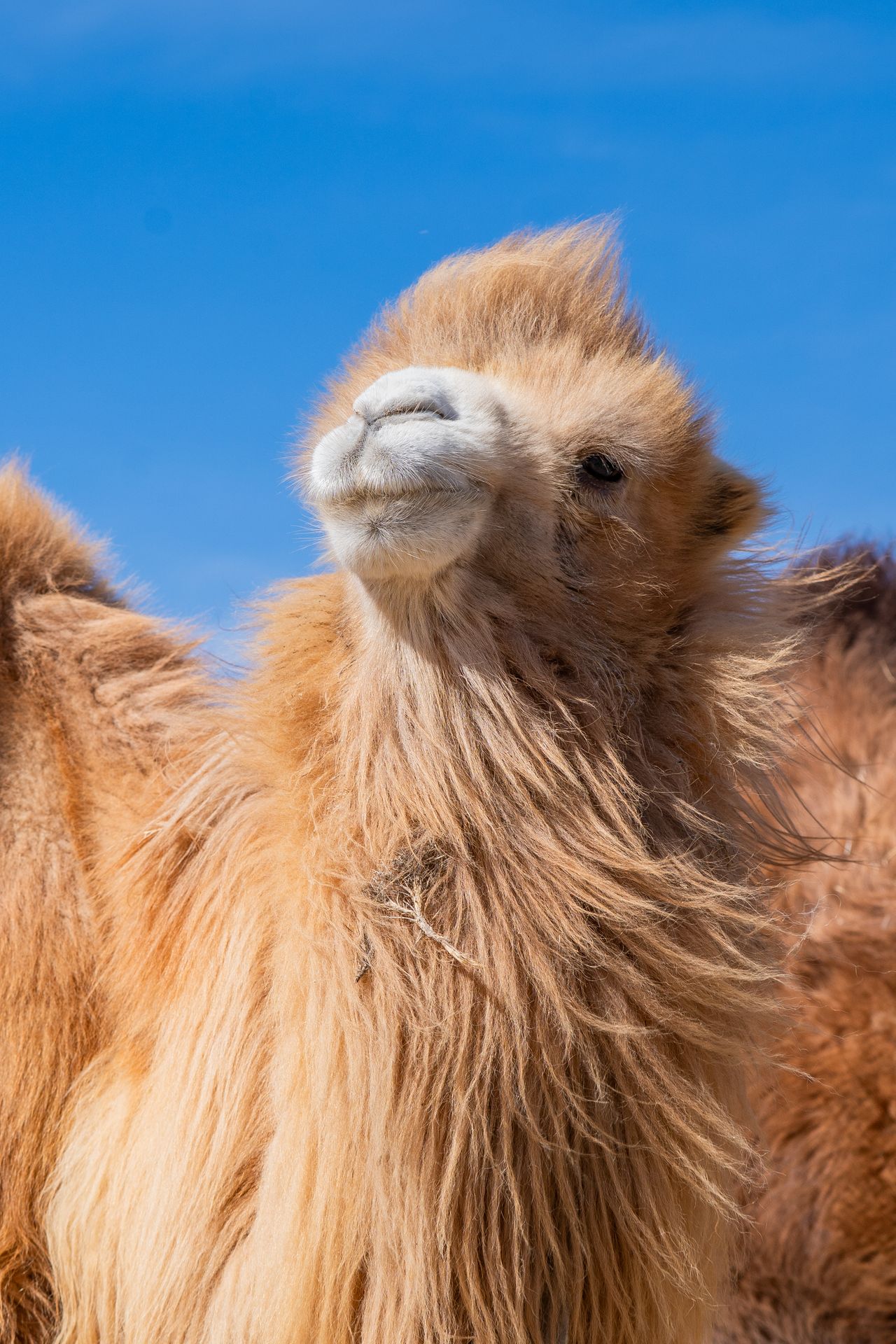
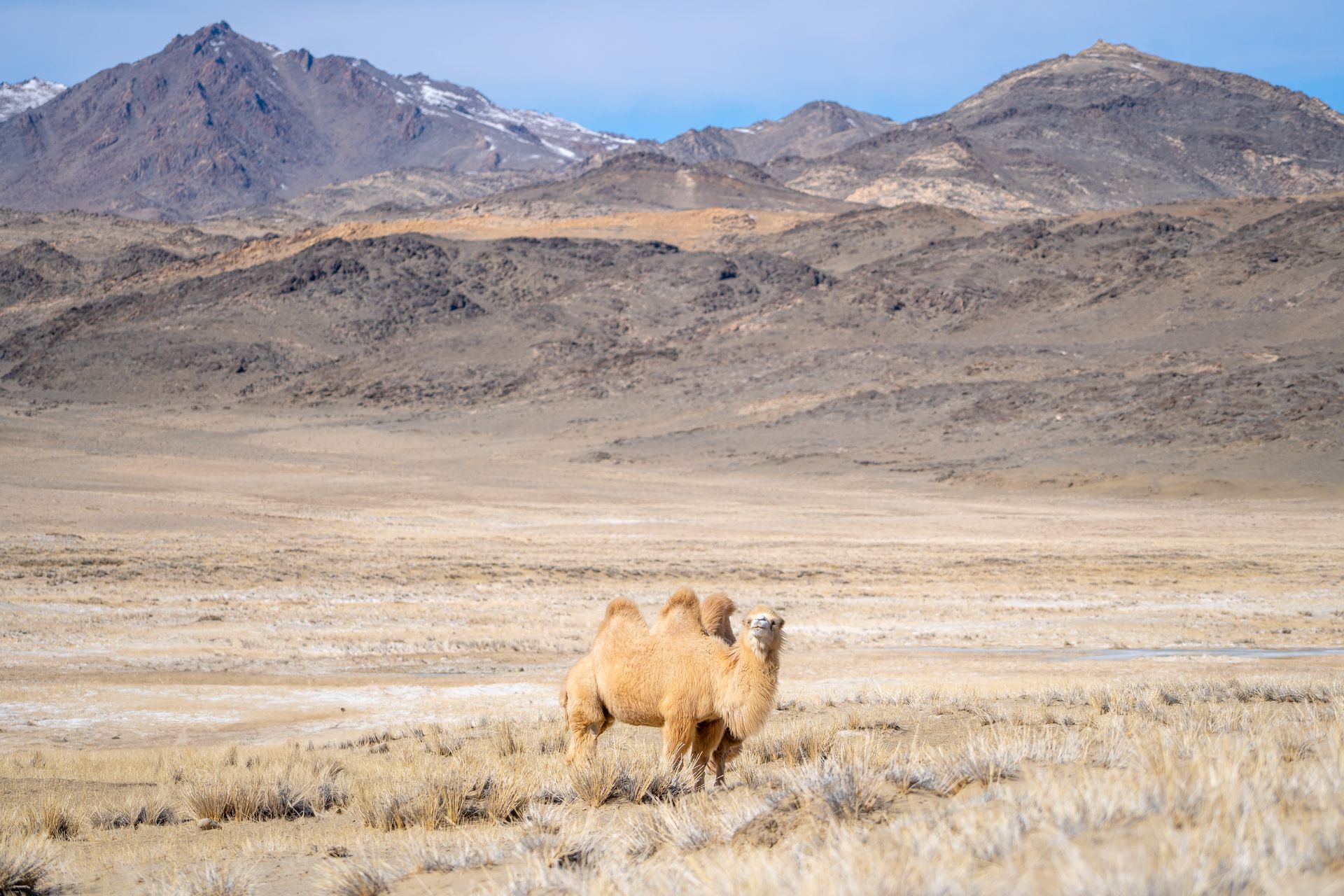
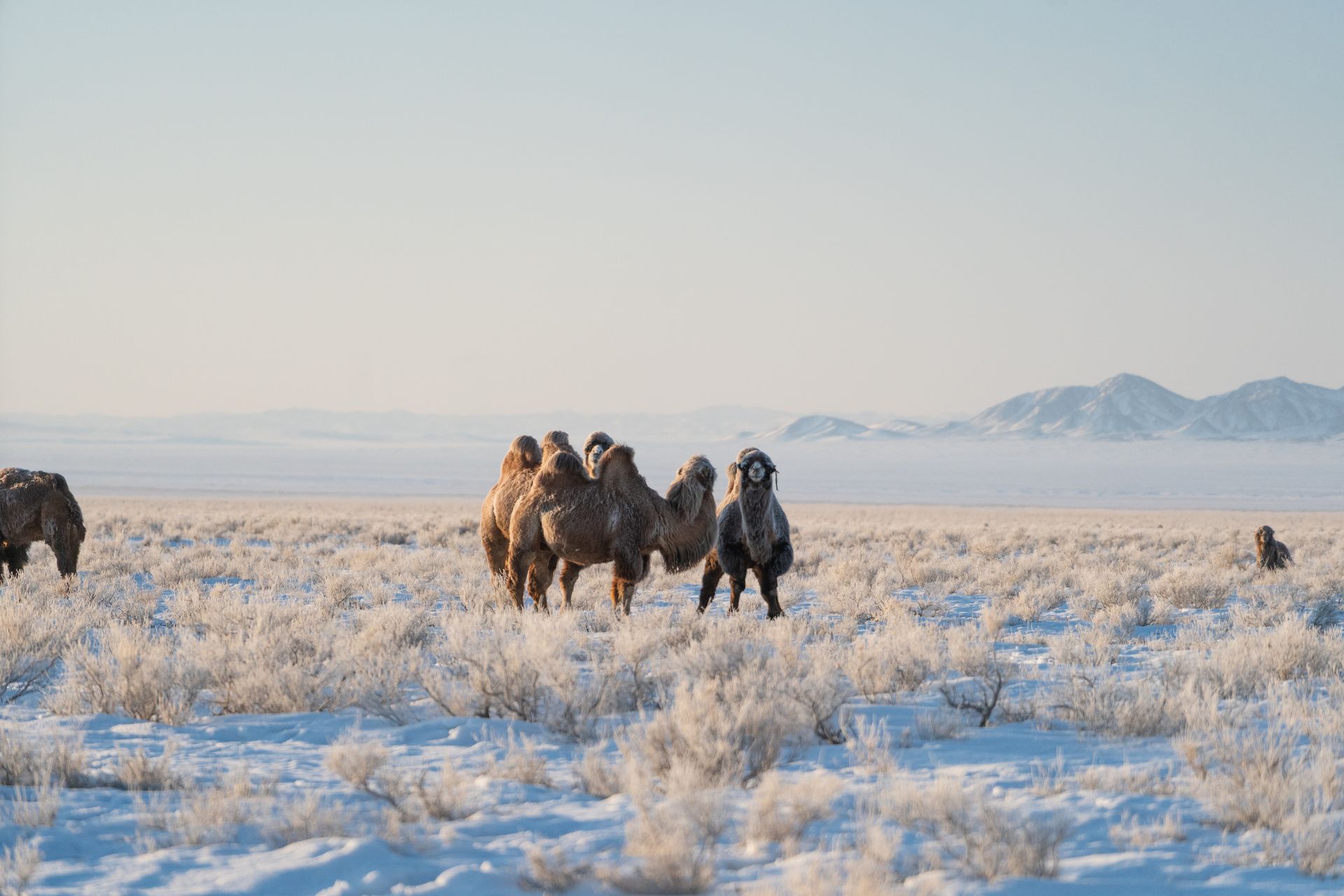
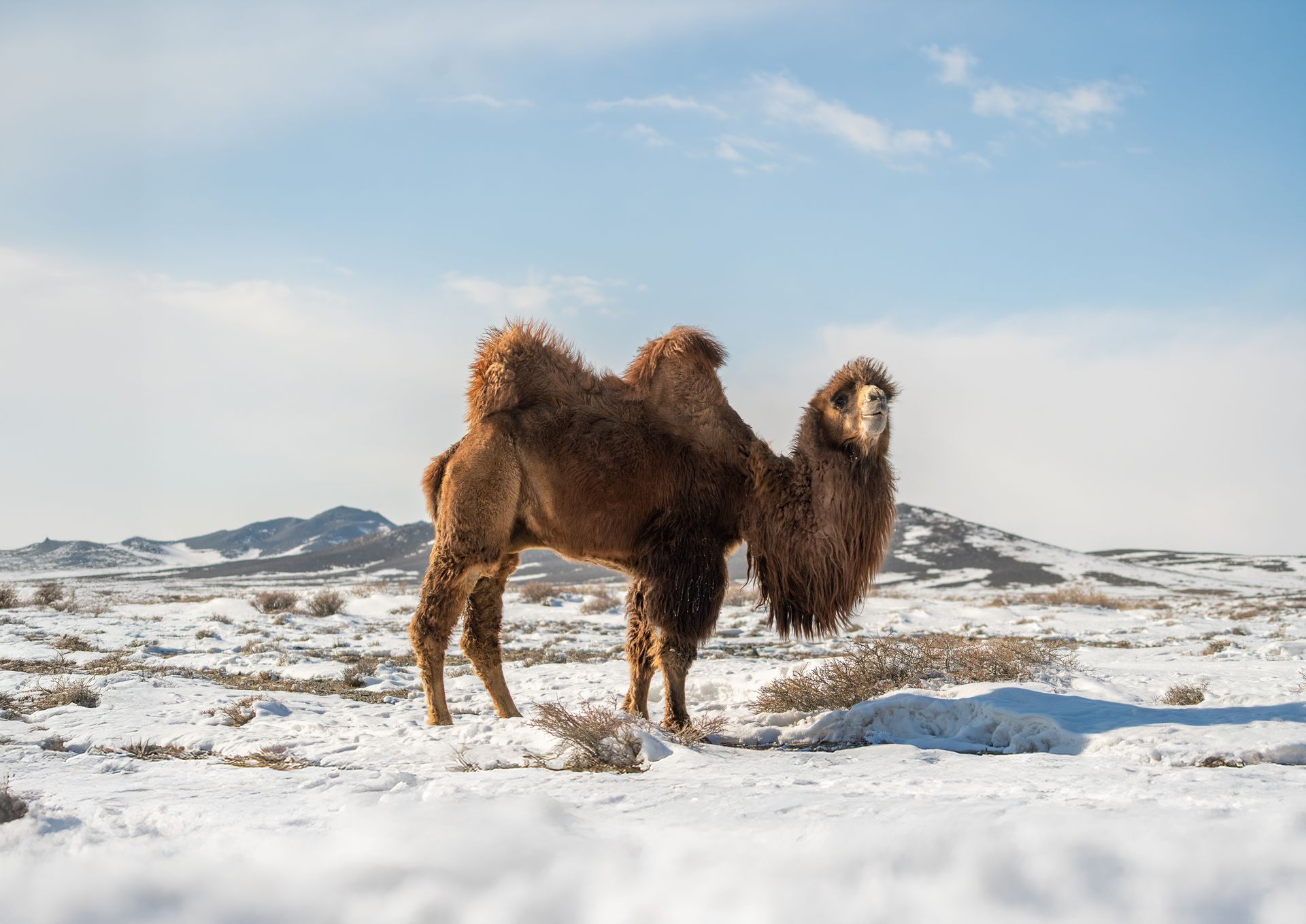
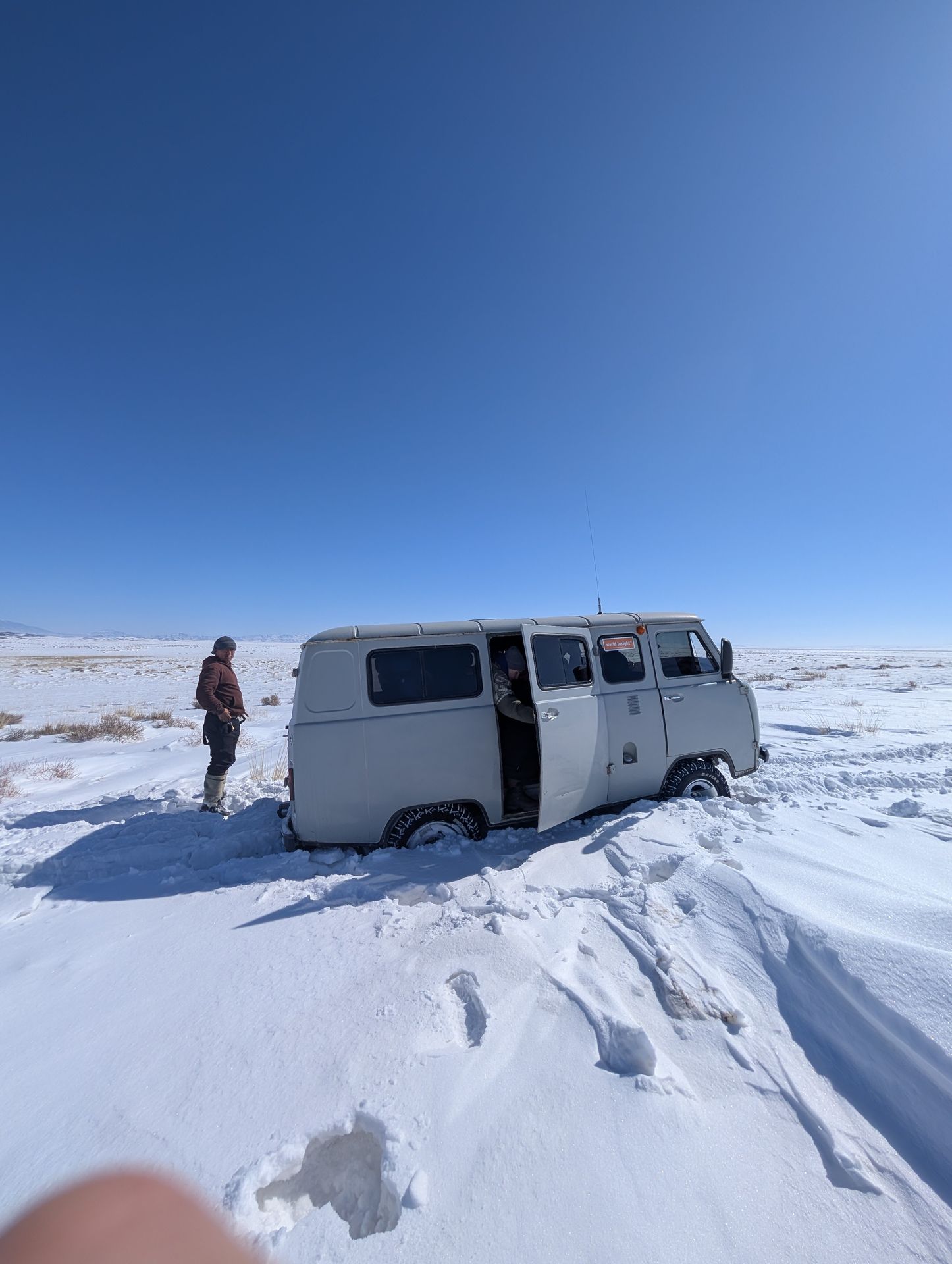
The next day, we head out again to visit nomadic families whom we’re interviewing for our documentary. The camera crew visits a neighbor right next to the research center who wants to show us his camel herd. Winter, however, has taken quite a toll on his herd. Extreme cold, unusually heavy snowfall, and wolf attacks are the dangers his animals face most frequently here. Every day, the nomads therefore head out into the steppe, always keeping one eye on the herd, usually through binoculars or a telescope. Their keen eyes can spot their own herd even when the animals appear as nothing more than small black dots on the horizon. The nomad introduces himself as Erdenetsogt and speeds ahead in his Jeep. We try not to lose ground in our UAZ van, but due to its weight, we often get caught in snowdrifts and nearly get stuck. Erdenetsogt is a few meters away and suddenly gets out; he has spotted small dots on the horizon that could be his camel herd. He pulls out his binoculars, looks toward the horizon, and everyone waits in anticipation. Then comes the disappointment: they aren’t his camels, but a neighbor’s. The journey continues until, after another half hour, we spot a herd with three young camels eating frozen grass and snow. The animals are shy, allowing themselves to be photographed only from a distance, and even Erdenetsogt keeps his distance from his own herd.
In this short documentary, the yak herder Tomro explains what life is like in sub-zero temperatures.
We also have an invitation from the chairman of the camel herders' cooperative, from whom we purchase wool for the production of our baby-clothes.. The plan is: "We'll make a quick trip to the nearest yurt, which isn't far away, visit him for lunch, and then head back." What was supposed to be a short trip turns into a full-day excursion from the research station, covering several kilometers across the frozen snow. For those who have pulled the atlas off the shelf, we’re traveling southwest of Bij Altay, right across the steppe, southeast of Hayirhan, a few hundred kilometers from the Chinese border. The cars get stuck repeatedly, and we’re moving slower than expected. By the time the yurt of the chairman of the camel herders’ cooperative appears behind a small hill, three hours of driving have passed. To make up for it, Njamajav and his family invite us to a big meal in the warmth of their yurt. It is our last full day in this remote region; surrounded by baby goats and under a cloudless sky, everything feels a world away from the hustle and bustle of the capital.
Doch die Hauptstadt und ihr Wirtschaftsmotor, die Wollindustrie, bestimmen auch hier am Rand der Mongolei das Alltagslebend er Nomaden. Der Nomade berichtet uns, wie jedes Jahr im Frühsommer die Preise für Kaschmir und Kamelwolle festgesetzt werden. Hier im Südwesten ist es jedoch besonders kalt und die Tiere werden erst im Juni geschoren oder gekämmt. Weil die Schurr der Wolle relativ spät erfolgt und die Transportwege nach Ulaanbaatar weit und weniger ausgebaut sind, ist das Nomadenkollektiv in einer schwierigeren Verhandlungslage gegenüber den Produzenten in der Hauptstadt. Auch müssen die Nomaden oftmals einen Kredit bei einer der Banken in der Hauptstadt im Herbst aufnehmen, um sich und ihre Tiere über den Winter zu versorgen. Die Einnahmen und zuverlässige Wollpreise sind daher ein wichtiger Faktor für die Nomadenfamilien. Die Kooperative, von der Njamajav den Vorsitz übernimmt, bietet Nomaden daher die Möglichkeit als Gemeinschaft einen höheren Wollpreis zu verhandeln und gegenüber Produzenten oder Wolleinkäufern sichere Abnahmemengen vor der Schur festzulegen.
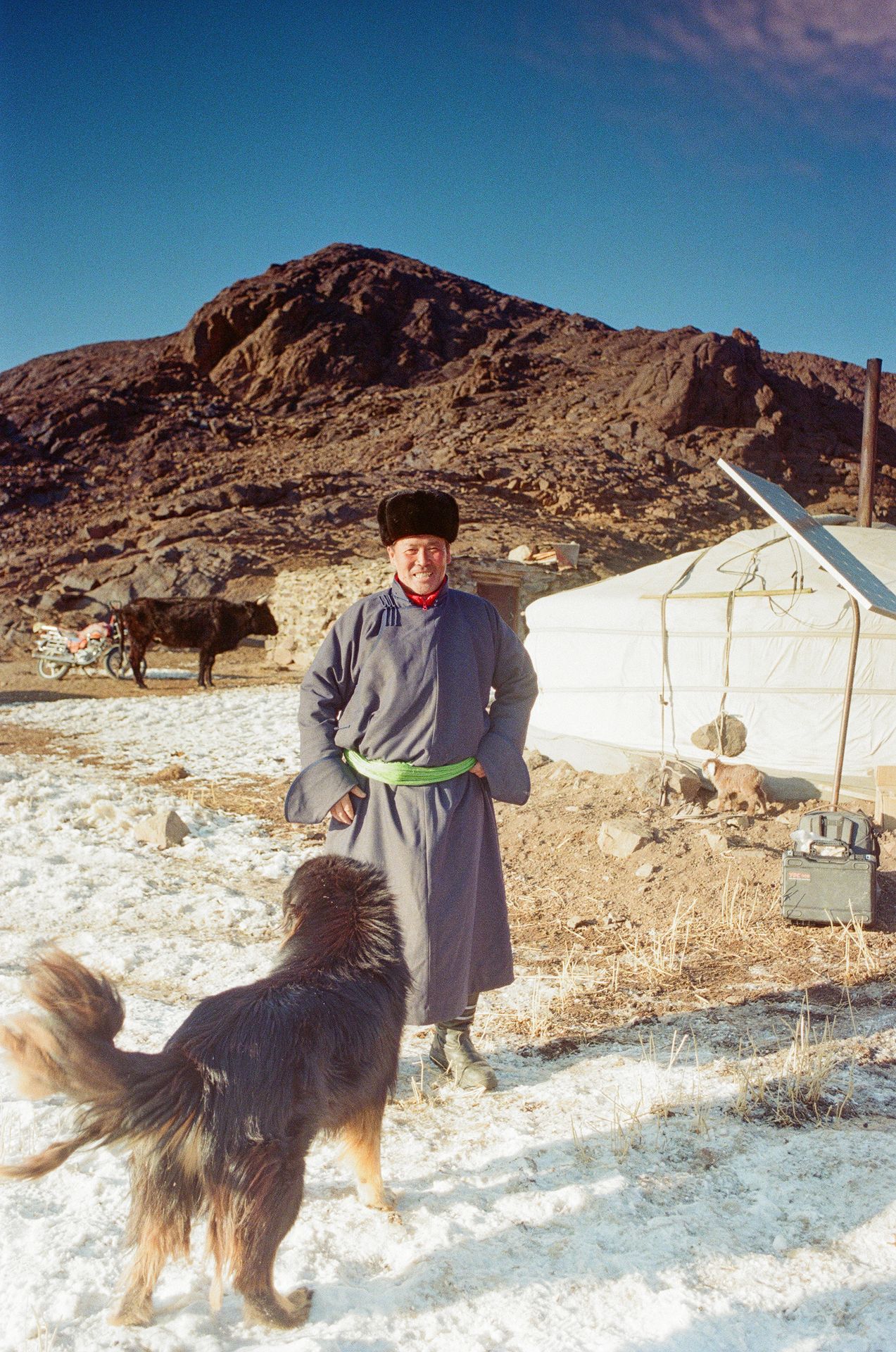
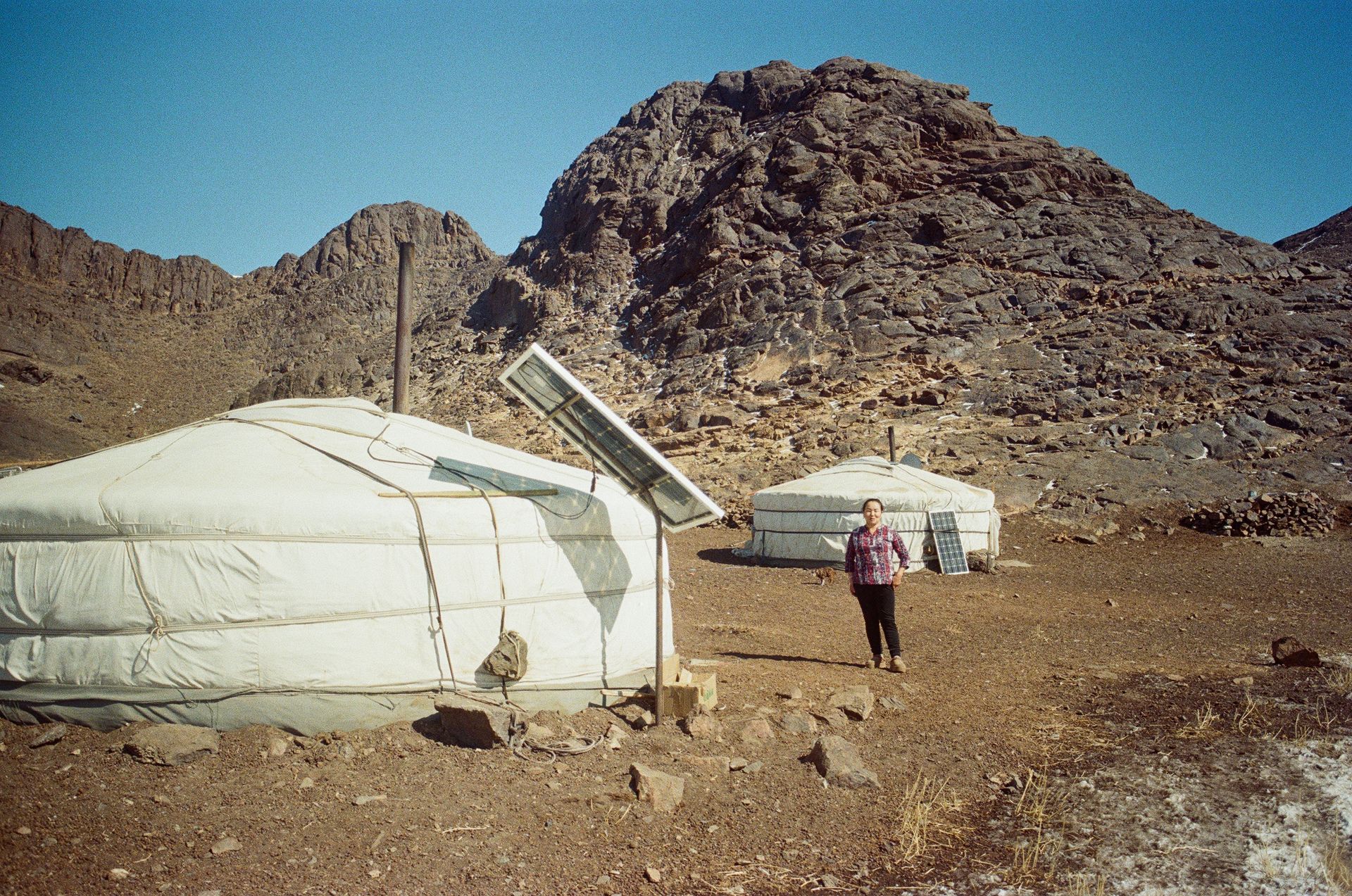
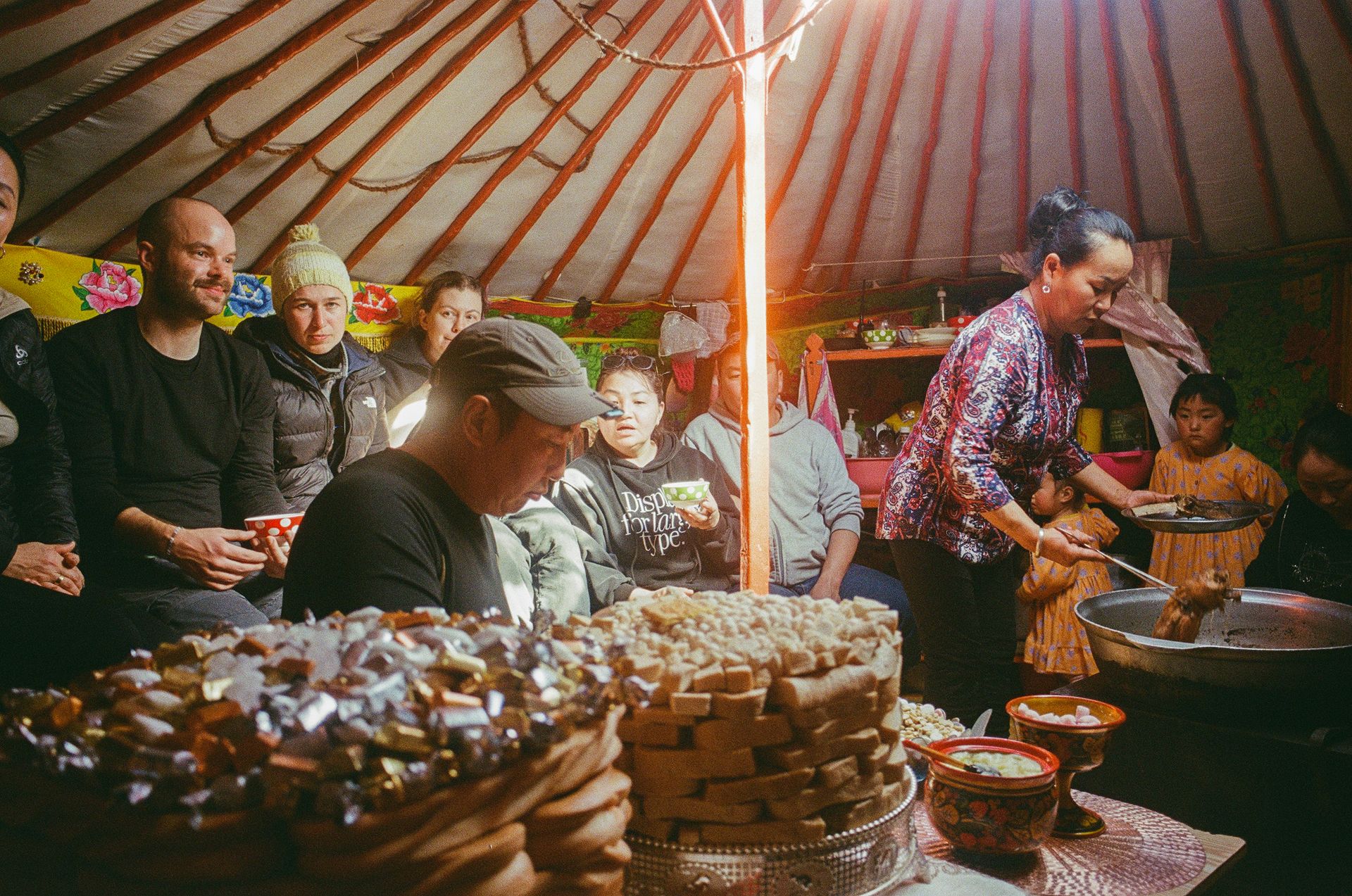
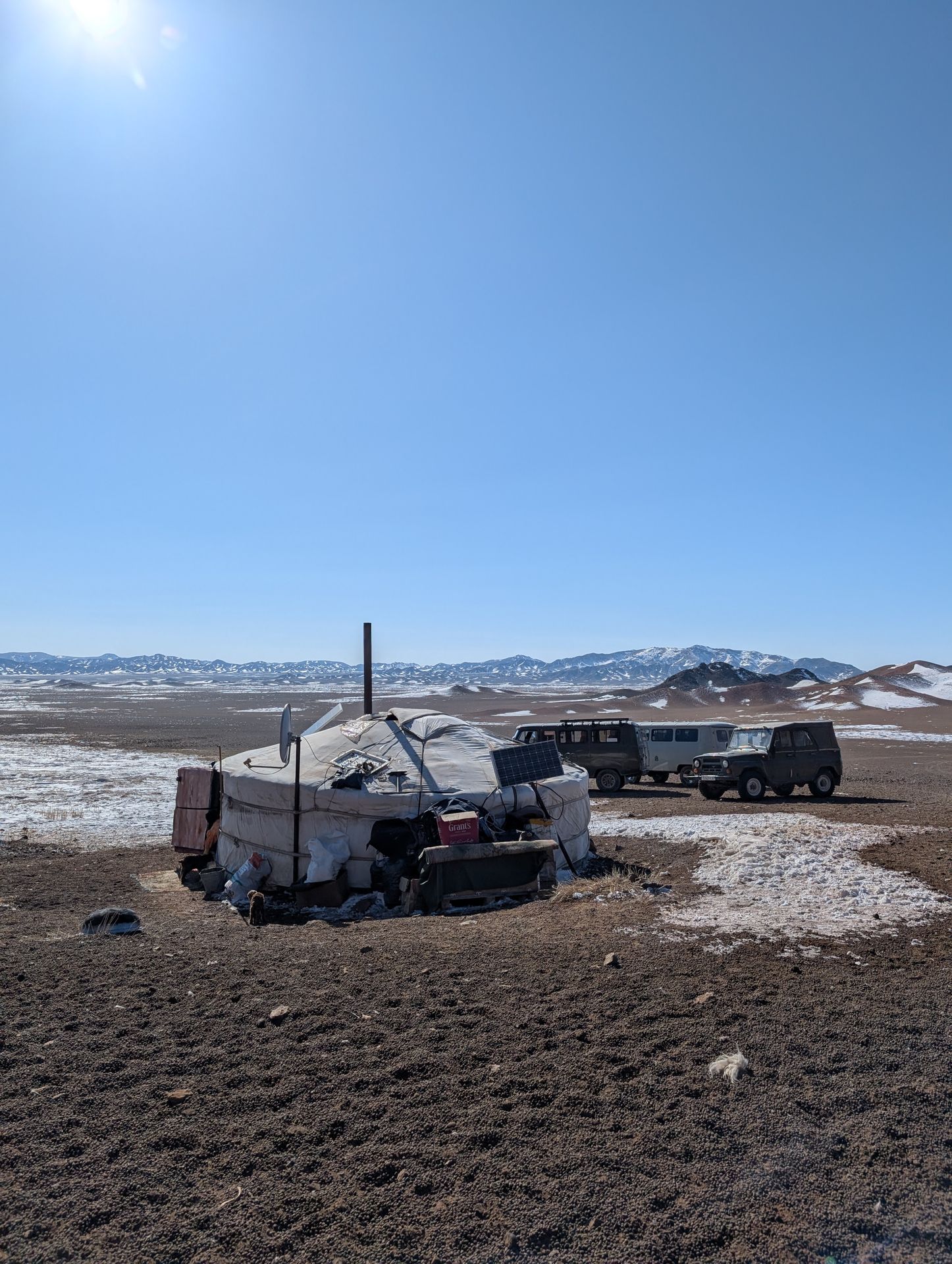
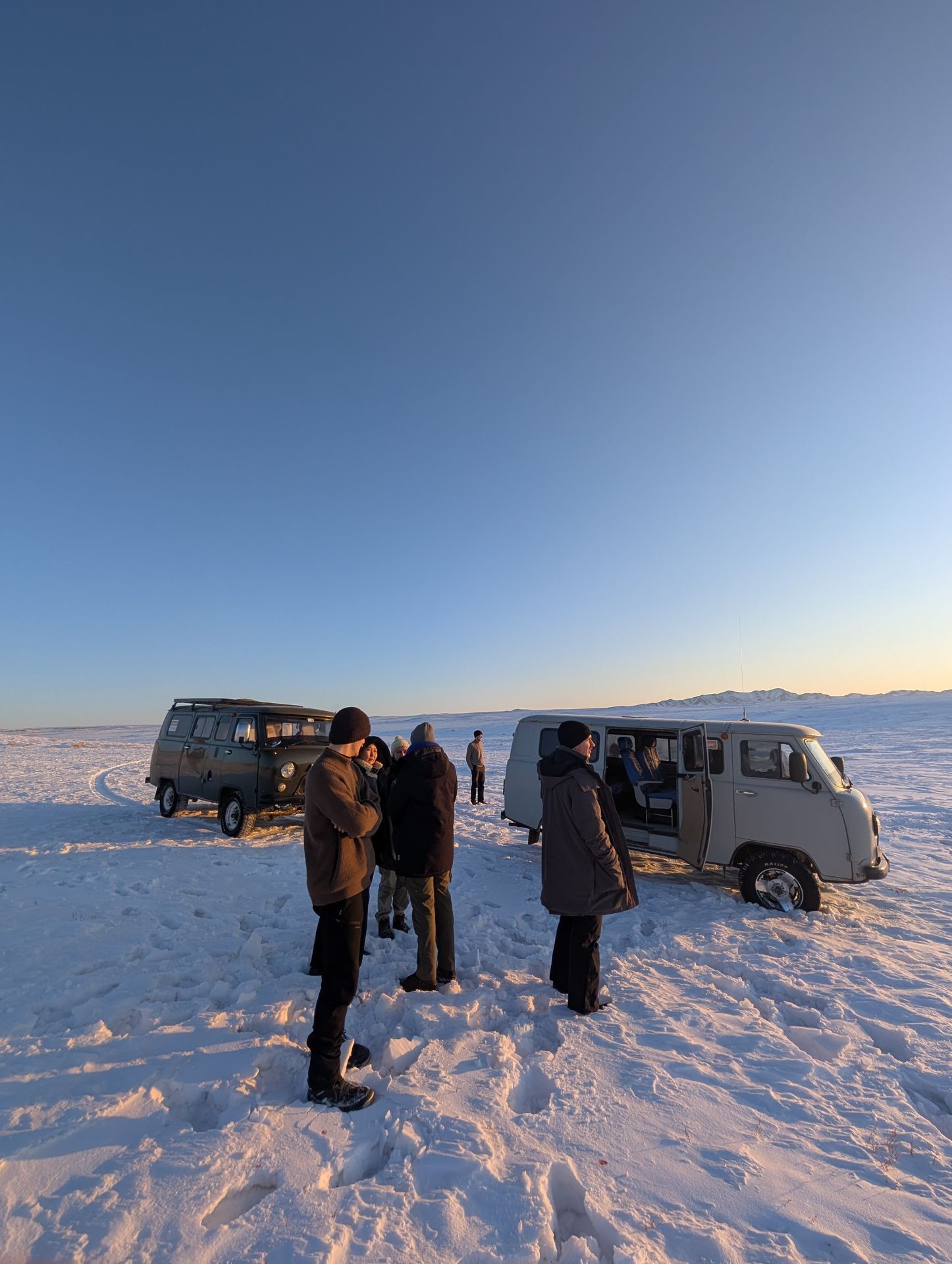
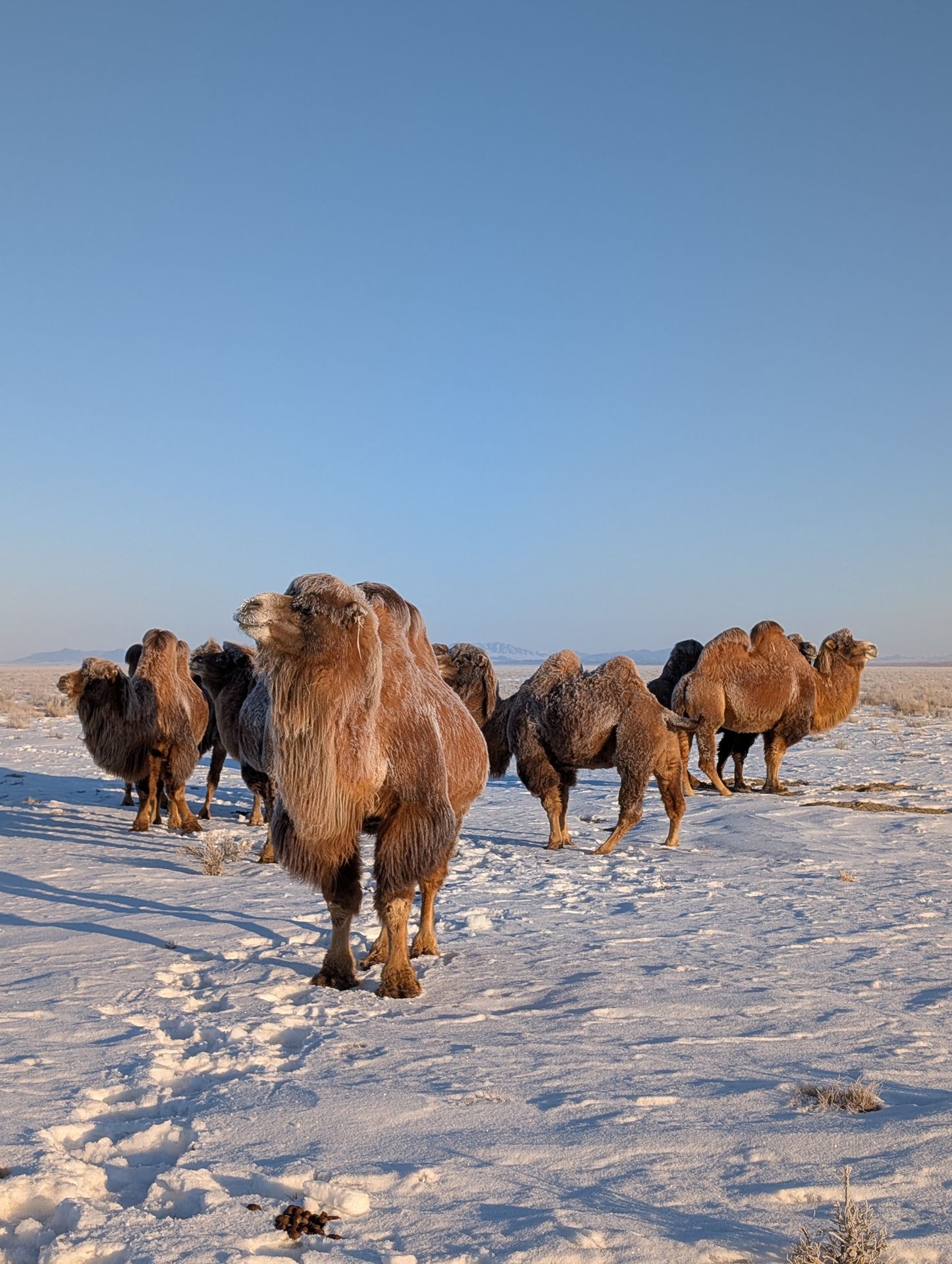
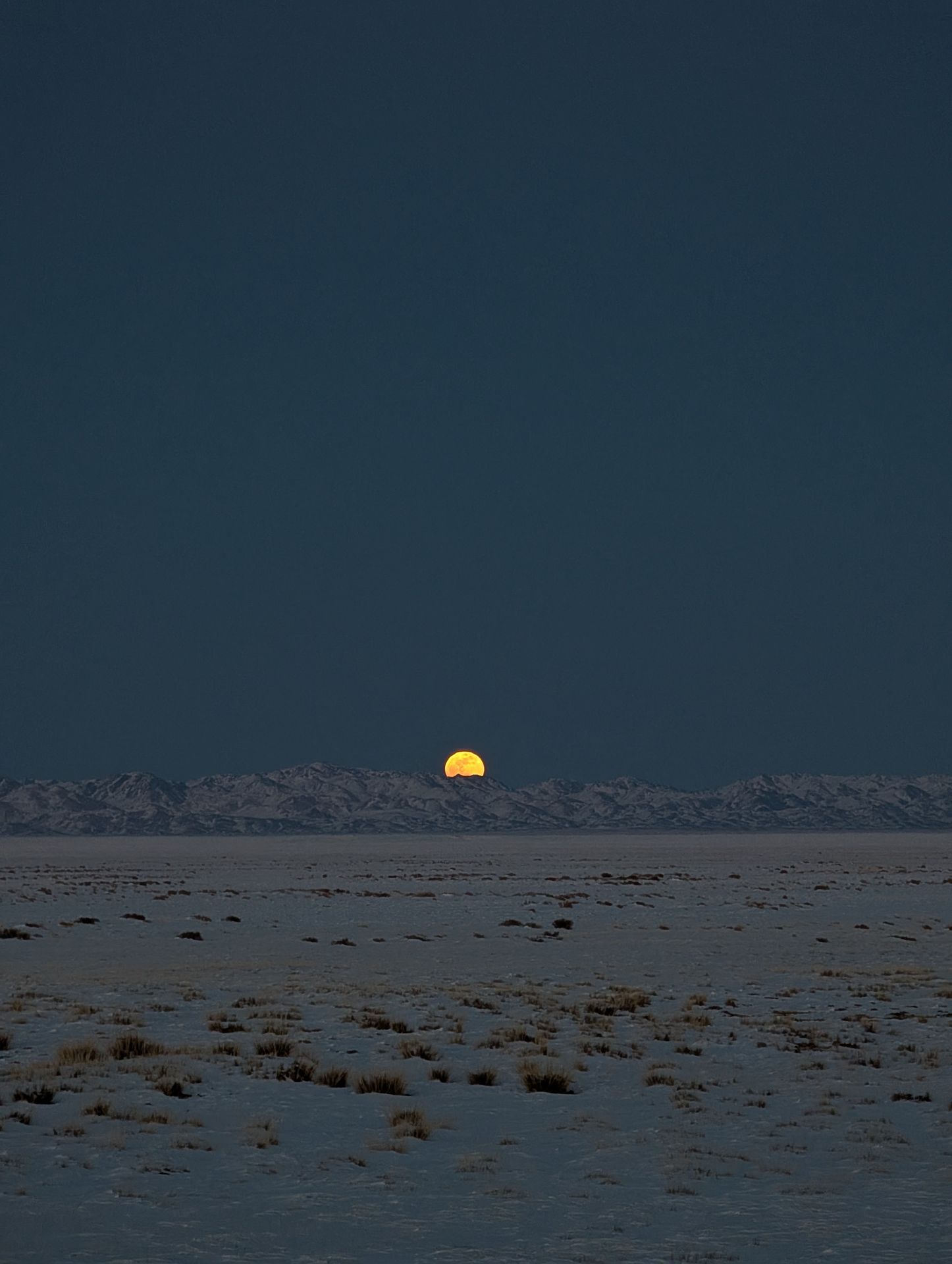
A Day in the Gobi-B Reserve: We Visit Njamajav and His Family
Our visit to Njamajav marks the end of our last day in the biosphere reserve. A short night (marked by vodka and carnival songs) later, our tour group is back in the two cars, heading for our next stop, Khovt. We trade the snow-covered national park—with its scattered yurts, wild horses, and shy camel herds—for a paved road along the southern foothills of the Altai Mountains. A beautiful route winds through the rocky gorges from which the Altai Mountains rise in the far west of Mongolia. At the end of the day’s drive, we arrive in the regional center of Khovt, swapping yurts for hotel accommodations and getting stuck in the snow for urban traffic jams. I am reminded of Njamavat’s words, spoken amidst snow and camels, that he prefers life as a nomad 100 times more than life in the city. For despite the extreme cold and living on the fringes of infrastructure and civilization in a protected national park, he doesn’t have to worry about rush hour traffic or gridlock on the main road.